

Prelegenci
SBOW 2026 – prelegenci i prelegentki w kolejności alfabetycznej
JO CUTTER

Dr Jo Cutter is a lecturer of work and employment relations at the University of Leeds, UK. Her research focuses on employment relations, negotiation and the regulation of work with a focus on skills formation, migration for work and climate change. Most recently on unions and the climate politics of the just transition in the UK and Spain. She has worked as a researcher for UK trade unions and local governments on campaigns for worker education and climate action including with the CLS Education for Action network. She is equalities rep of the University of Leeds branch of Unite the Union. She speaks English and Spanish.
Abstract:
Critical Labour Studies and worker environmentalism(s)
This paper will focus on research and researcher activism within the CLS tradition at the intersection of human–nature exploitation and worker responses to the climate and environmental crises. A rich body of academic research has begun to examine how workers are impacted by and collectively engage with climate politics and the so-called just transition. Yet, there is considerable scope to enhance CLS to further embed principles of democratic research design, translate/transform research in support of alternative approaches to worker and student learning on environmental issues at and beyond the workplace and connect local and global dimensions of worker-led climate and environmental action. Building on examples of researcher-activism within trade unions and the academy the paper considers the challenges and opportunities for the advancing the contribution of CLS to worker-led climate responses.
OKSANA DUTCHAK
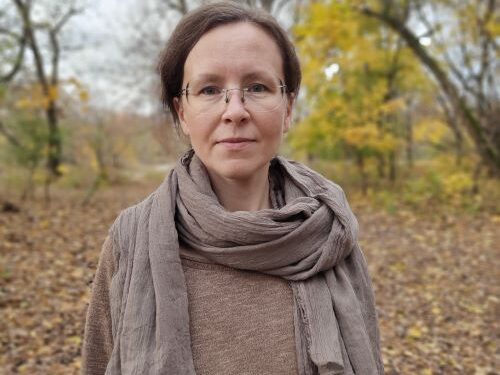
Oksana Dutchak is a sociologist and social anthropologist, based in Kyiv. She holds her PhD in social sciences from the Kyiv Polytechnic Institute and MA in sociology and social anthropology from the Central European University. She is the co-editor of Spilne/Commons Journal and currently the responsible research officer within the project “Researching the Transnational Organization of Senior Care, Labour and Mobility in Central and Eastern Europe”. Her research interests include: protests, workers protests, gender inequality, social reproduction, care labor. For several years, she has been researching labor in predominantly female sectors: apparel industry, retail, kindergartens, healthcare, elderly care. Oksana is devoted to engaged and public research, which contributes to public discussion and policies, trying to give the voice to workers and other structurally underprivileged groups.
Abstract
Building hierarchies and sustaining disposability: systemic boundaries of care (and love)
We care for others because it is the fundamental prerequisite of physical and social survival, and because of human affections of love, devotion and responsibility. But by caring, we also reproduce the key elements of the socio-economic system: labor power and social fabric. Being part of social reproduction, care is subjugated to the necessities of production; rooted in patriarchal division of labor, it is overwhelmingly feminized. These systemic features of care hierarchize and devaluate it: some segments of care labor are more important for the socio-economic system, while others are treated as disposable. In this contribution I explore how care hierarchies and gendered affections are building boundaries of care to contain, discipline and (super)exploit care labor.
ANNE GRAVELLE ANTONI
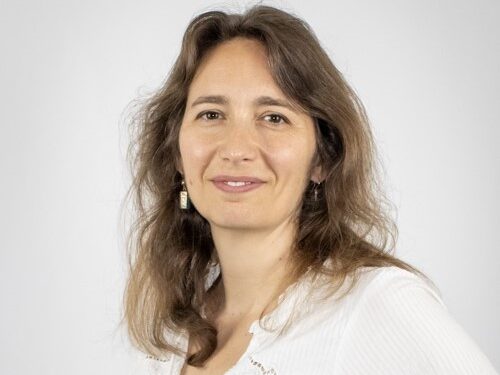
Anne Gravelle Antoni is an Associate Professor in Ethics and Human Relations at Grenoble Ecole de Management. She holds a PhD from the University of Warwick (UK), a Master in Management from ESSEC (France), and a Master in Social Psychology (University Paris 8). Her research explores critically the experience of working under the capitalist organisation of labour. She studies the construction of morality at work and the place of care in contemporary economic regime. She serves in the editorial boards of Journal of Business Ethics, Business Ethics Quarterly, Organization and Academy of Management Learning & Education.
Abstract
Moral meanings of work and life: The place of care in work organisations
The struggle for meaningful work should be understood as part of the struggle for living meaningful lives. Workers endeavour to care for themselves and for others through work, which entails addressing affective and physical needs. Yet, because of structural and normative conditions of work in the capitalist and managerialist regime, they often fail to do so. A feminist ethics of care lens allows unveiling which needs for care are being attended to when working and which needs are being ignored. Care is constrained by structural (i.e. time and space) and symbolic (i.e. moral responsibilities) boundaries between the work and the nonwork. This renders care work particularly precarious, whether in its ‘private’ or ‘professional’ form. Solidarity is a necessary way forward for a just and democratic allocation of care responsibilities and labour but is also limited by social boundaries of work. Drawing on studies in different work organisations (in social work, advertising, and higher education), I will discuss how the place of care and solidarity is constrained by moral constructions of the meaning of work and labour.
ARLIE HOCHSCHILD
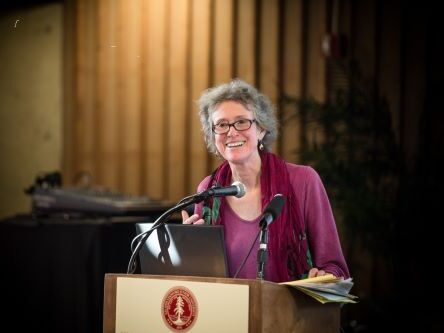
Arlie Hochschild is a professor emerita in sociology at the University of California, Berkeley.Her last two books have led to short films available on national public television and have been translated into Polish. Stolen Pride: Loss, Shame and the Rise of the Right, was chosen as a book of the year by the New York Times and was named as one of former President Barack Obama’s 10 favorite books of 2025. Like her earlier book, Strangers in Their Own Land: Anger and Mourning on the American Right, she explores the circumstances that give rise to right wing “emotional capture.”
Abstract
Politics as Emotional Capture: what we can learn
How, I ask, did Donald Trump “emotionally capture” a sector of Americans who remain devoted to him as he pursues his right-wing agenda. Based on field work in the coal fields of Appalachia, in the whitest and second poorest congressional district in the US, I describe the conditions of loss and fear of loss that make a given population “ready to hear” what he says. I then describe the three steps of emotional capture—a) an appeal of recognition, b) an invitational narrative of stolen pride, and c) a continually reenacted “anti-shaming ritual.” Through his he channels shame to blame at various out-groups—immigrants, universities, the media, and others. I end by suggesting ways emotional capture is best countered.
KRZYSZTOF KONECKI

Krzysztof Tomasz Konecki is a professor of sociology and works at the Institute of Sociology, Faculty of Economics and Sociology, University of Lodz. His interests lie in qualitative sociology, contemplative sociology, art-based research, sociology of interaction, symbolic interactionism, sociology of the body, methodology of social sciences, visual sociology, communication and intercultural management, and organizational culture and management. He is the editor-in-chief of Qualitative Sociology Review, a member of the Board of the Polish Sociological Association, and a member of the Committee of Sociology of the Polish Academy of Sciences. He recently wrote a book: A Contemplative Study of the Mind, Emotions, and Body
Abstract
Emotions and the mood in the neoliberal society
I focus my presentation on the sociological analysis of emotions in contemporary capitalistic societies. First, I focus on Arlie Hochschild’s sociological concept of stolen pride. Later, I look at the emotions from the perspective of philosopher Byung-Chul Han, which gives me the conceptual tools for analysing and contemplating the issues of emotions (pride and shame, but also the emotions connected with narcissism, depression, disappointment, happiness, hedonism, pain, and others) in the pride economy, which is currently experiencing crises. I also analyse hope for the future and the possibilities for change in societies and economies facing political, ecological, and planetary challenges. The conclusions will relate to my contemplative proposal to explicate emotions in neoliberal society, especially the neoliberal dispositif of happiness that centres on the ego. I also use contemplative art as a tool for explicating and understanding/feeling the mood. I try to explicate emotions as inauthentic/authentic experiences, as the illusions created by the so-called society, together with holders of power to regulate social relations, mainly in work situations and institutions, and in the domain of politics. The contemplation will be conducted at the individual and social levels (das Man).
EDOARDO MOLLONA
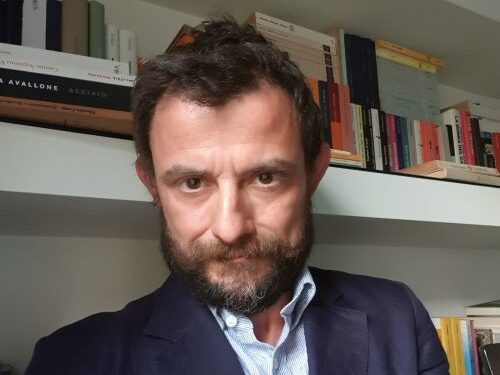
Edoardo Mollona graduated cum laude in Business Economics at Bocconi University in Italy and received a PhD degree in Decision Sciences at the London Business School. He is currently full professor of Business Ethics and Corporate Strategy in the Department of Computer Science and Engineering at the University of Bologna. He conducts research on the relation between corporate and politics, on privatization processes and on the political power of large technology corporations in digital capitalism. In this area of investigation, he has published books and journal articles and he has been principal investigator of EU-funded research projects.
Abstract
The struggle over the meaning of “work” in the platform economy.
This study examines how public discourse surrounding the platform economy conceptualizes work. Drawing on an empirical analysis of a corpus of about 90’000 articles extracted from a sample of newspapers from 17 European countries in the period 2007-2020, the research investigates the competing narratives through which the concept of labor in the platform economy is represented and interpreted. The findings reveal a fundamental tension between two dominant frames. On the one hand, work in the platform economy is portrayed as a historically unprecedented opportunity for learning, flexibility, and the valorization of individual skills. On the other hand, a critical perspective highlights the contradictions inherent in labor in the platform economy, emphasizing processes of material exploitation carried out by large corporations — most notably Amazon. These divergent representations are interpreted as part of a broader struggle over the meaning of work, which can be understood as a Gramscian “war of position.” In this sense, public discourse becomes a key arena in which competing actors attempt to shape hegemonic understandings of labor in the contemporary economy.
BARTOSZ MIKA
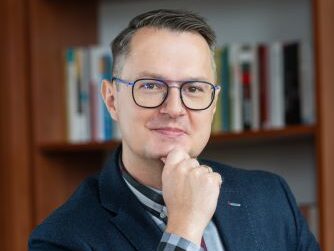
Bartosz Mika is an Associate Professor at the University of Gdańsk, Poland, and Head of the Division of Sociology of Work and Social Movements at Institute of Sociology. His research interests focus on classical sociological theory, Marxism, the sociology of work and the economy, and social inequality. He is the author of three single-authored monographs and one co-authored book, the most recent of which examines the sociology of intellectual property rights. In recent years, his research has concentrated on on-demand labour platforms and transformations of work in the platform economy. Alongside his academic work, he teaches sociology and is actively engaged in public and civic initiatives. He is a member of the Workers’ Initiative Trade Union.
DOMINIKA POLKOWSKA
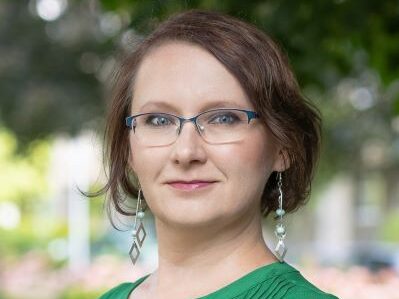
Dominika Polkowska, sociologist, an Associate Professor at the Maria Curie-Skłodowska University in Lublin, Poland, where she works in the Department of Sociology of Economy and Social Research Methods. Her research focuses on the sociology of work, economic sociology and transformations of labour in the platform economy, with particular attention to algorithmic management, working conditions and workers’ experiences in digital labour platforms. She has conducted extensive empirical research on platform workers, especially drivers and couriers working in on-demand services.
She teaches courses primarily in qualitative research methods and methodology of social research. She is the Chair of the Sociology of Work Section of the Polish Sociological Association. Her academic work combines empirical research on contemporary labour markets with broader sociological analyses of changes in work and employment in digital capitalism.
Abstract
What Happens When Platforms Mature? Worker Trajectories in Algorithmically Managed Labour (Dominika Polkowska and Bartosz Mika)
Research on platform labour has largely focused on precarity, algorithmic control, and regulatory debates during the early expansion of digital labour platforms. Much less attention has been paid to what happens when platforms cease to be disruptive newcomers and instead become stable and institutionally embedded actors. Drawing on long-term research on ride-hailing drivers and food-delivery couriers in Poland, this keynote examines platform labour in its phase of organisational maturity. In our view, it is time to move beyond the language of novelty and disruption and recognise that most on-demand labour platforms have now existed for over a decade. Their presence in the labour market has become normalised, and work mediated by platforms has reshaped the specific sectors in which they operate. The talk argues that once platforms stabilise as labour market institutions, the key analytical question shifts from whether platform work is precarious to how workers position themselves within this labour regime over time. Rather than treating platform workers as a homogeneous category, the presentation introduces the original T-A-S-K typology, a framework capturing distinct trajectories through which workers engage with platform labour. Drawing on quantitative analyses and tracing these trajectories in qualitative material, we develop a new typology of platform work. These trajectories range from workers trapped in flexibility, whose livelihoods gradually become dependent on platform income, through Committed Workers and the Unanchored of Flexibility, to comfort-oriented Platformers, who treat platform work as an opportunistic and temporary activity. By identifying patterned trajectories of engagement with platform labour, the proposed framework shows how mature platforms generate differentiated worker experiences, expectations, and strategies. The T-A-S-K typology provides a new analytical lens for understanding how workers navigate and interpret algorithmically managed labour in mature platform economies.
KATARZYNA RAKOWSKA

Katarzyna Rakowska is an assistant professor at the Faculty of Sociology and Centre for Migration Research at the University of Warsaw. She holds a PhD in sociology and specialises in labour struggles, workers’ mobilisations, trade unions and labour migration. She was the coordinator of the National Science Centre Preludium grant „Trade Unions and the Restriction of the Right to Strike in Poland”. She has experience in national and international research projects, including Horizon and International Organization for Migration research programmes focusing on labour relations, migrant work, and industrial transitions. Her current work centres on changes in the labour process and labour regimes, as well as the role and position of migrant workers within these processes.
Abstract
Being a Researcher and an Activist in a Grassroots Radical Union: A Two-Way Street
This paper focuses on the dynamic interplay between academic research and trade union activism through the lens of boundary-crossing practices in a grassroots radical union in Poland. I analyze how knowledge, networks, and resources flow bidirectionally between academic and union spheres, creating mutual benefits while challenging traditional institutional boundaries. The study demonstrates how such crossovers can strengthen both the trade union and academic research, focusing on how critical diagnoses of work can directly inform collective action. By evaluating the tensions and synergies of maintaining dual roles as researcher-activists, I argue that non-incorporated, boundary-crossing practices offer a vital counter-movement against marketized constraints in both academia and the broader labor landscape.
DEVI SACCHETTO
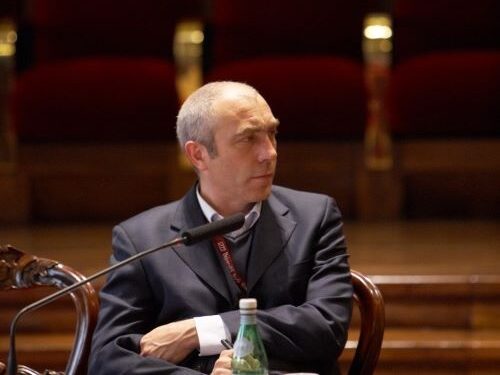
Devi Sacchetto is Professor of Sociology of Work at the University of Padua (Italy). His research focuses on migration and labour processes, particularly in Europe. Among his most recent publications is The Politics of Migrant Labour (with Gabriella Alberti, Bristol University Press, 2024). His work explores the dynamics of labour mobility and precarious work, focusing on workers’ experiences and everyday strategies.
Abstract
The Politics of Work: Producing Meaning, Producing Workers
This paper contests the contemporary debates on the meaning of work asking why work must be meaningful at all. Human beings require activity, cooperation, and social production, but they don’t require wage labour. Wage labour is a historically specific form of organizing human activity. While in Western societies, work has been considered a central source of identity and status promising individual dignity, inclusion and even redemption, in state socialist societies work was a collective duty and a fundamental contribution to the building of the “new society”. In an attempt to legitimise their system both capitalist and socialist countries promoted work through different narratives: one based on individual realisation and meritocracy, the other on collective purpose and social obligation. Drawing on qualitative research I conducted across different contexts in Western and Eastern Europe with local and migrant workers, trade unionists, managers and other key informants I will highlight how workers in different labour regimes build their own meanings of life, and in doing so also redefine the place of wage labour within it, sometimes distancing themselves from dominant narratives that equate work with dignity, identity, and moral worth. Instead of treating work as a natural source of value, this paper aims to see “the meaning of work” as a political project – one that obscures the asymmetries of power embedded in wage labour itself.
CHARLES UMNEY

Charles Umney is Professor of International Work and Employment at Leeds University Business School. His main research interests include technological change and the future of work; worker organization and protest; industrial and social policy; and more broadly, the connection between dynamics of market competition and workplace power relationships. He is the author of Class Matters (Pluto, 2018) and co-author of Marketization (Bloomsbury, 2022).
Abstract
Technological frames of reference and the development of the logistics industry in Northern England
The theme of my talk will be extending the range of actors engaged in sociological analyses of technology and the future of work. I will discuss recent research which interrogates assumptions and priorities that managers and technological developers assign to workplace technologies, presenting evidence from UK warehousing. I will show how we have sought to distinguish different managerial “frames of reference” in relation to technology in warehousing workplaces, each entailing different approaches to technological implementation and, critically, different ways of conceiving workers’ agency in relation to it. From here, I will also consider the role of the state, considering how state actors can act to shape the relationship between technology and the future of work, and highlighting the damage done by decades of marketisation in “hollowing out” state regulatory capacity. All of these comments will be based on our research team at Leeds’s investigation into the experience of the warehousing industry in Yorkshire, England.